
ASTA Legislative Day
Updated: Apr 28
April 20-21, 2026
I truly believe the travel industry is one of the best industries to be in. It’s full of people who enjoy helping other people, who love to travel, and who step up to help others in our industry.
A perfect example of this is the American Society of Travel Advisors (ASTA). It is the largest travel advisor association in our industry, providing advocacy at the industry and government levels, along with credibility, professional development, and networking opportunities both locally and globally. Regional chapters are all run by volunteers, people who just want to help others in this industry.
One of ASTA’s most important and unique annual experiences is Legislative Day. Members from across the country come to Washington, DC to meet with members of Congress and their staff to share concerns and help influence policies that affect us all. Travel advisors, agency owners, supplier representatives and executives, host agency and consortium representatives all gather for two days to make a difference for all of us in the industry.
I had thought about participating in the past, but the schedule never worked out. This year, however, I made the time and the journey to join this group. Over 200 members, representing 47 states, participated in nearly 200 meetings…
Teams were organized by their home location, or sometimes business locations. On the Colorado team, I was the sole travel advisor (and agency owner). We also had an ASTA staff member (Todd Wallace), a VP from the travel division of a major brand (Mike), and a CEO and Director Marketing from a luxury river cruise line (Jen and Kelsey Thompson).
The event started Monday morning with registration – grabbing our lanyards, and being directed to our tables. We were given a folder with information – talking points, maps of the congressional offices, meeting note forms, and handouts to give to the representatives. Breakfast followed, along with an introduction and overview for those of us who had not previously participated.
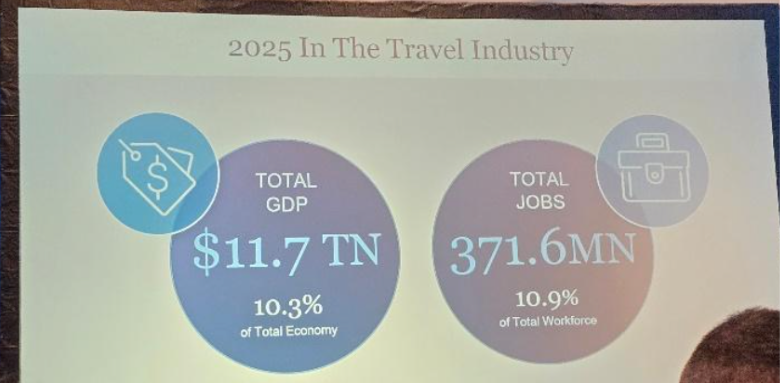
Around 9am, everyone else joined and the rest of the morning was spent hearing news about the industry (it is definitely a growing industry!), updates from various government officials, and learning more about the issues we would be presenting to the congressional representatives.
Zane Kerby, President & CEO of ASTA, interviewed Pete Meachum, Chief of Staff for the Secretary of the Department of Transportation. We also heard from Robert O’Leary, Deputy Assistant Secretary for Travel and Tourism in the Department of Commerce.

After lunch, ASTA staff shared more do’s and don’ts, along with additional details on schedules, navigating the congressional office buildings, dress codes, and more. A panel of congressional aides helped us understand what the next day would look and feel like, and we participated in a “simulation” that highlighted some “definitely don’t do’s,” along with role playing with our team to prepare for our meetings.
The three issues we are focusing on this year are:
The Flight Refund Fairness Act – legislation was passed that requires airlines to refund passengers within 7 days if the airline cancels or significantly changes.
But if the ticket was actually purchased by an agency on behalf of a client (such as a large group or corporate travel), the rule is that the airlines only have to reimburse the travel agency “promptly.”
Since the agency has to refund the client within 7 days, this could mean tens of thousands of dollars that the agency would have to pay without any definitive plan of when they would receive the money from the airline.
The Act needs to be updated to include the same timeline for ticket agents.
The ACPAC Modernization Act – the Aviation Consumer Protection Advisory Committee currently has representatives from air carriers, airport operators, state/local governments, and consumer advocacy groups. However, there is no ticket agent on this committee.
Travel agents issue over 800,000 airline tickets every day
If there had been a ticket agent rep on this committee, the previous issue would not have happened because they would have protected our industry.
This was already passed in the House, so we would be looking for support from the Senate.
Modern Worker Empowerment Act – at this time, there are different definitions between the IRS and the Department of Labor as to who is classified as an Independent Contractor and who must be an employee.
Independent Contractors (ICs), meaning advisors who run their own businesses.
2/3 of travel advisors are ICs.
In some industries, employers try to classify workers as ICs to avoid paying unemployment and payroll taxes, and other benefits.
This is a choice; many enter the industry specifically for this flexibility.
People with disabilities, military spouses, young mothers/fathers, retirees, and many more want the flexibility of being an IC.
Travel advisors run their own businesses, with the flexibility to build a schedule and structure that actually works for their lives. Therefore, they align with the IRS definition of an IC, but not the Department of Labor’s definition.
Until the definitions match, travel agencies (97% are small businesses, 80% women owned) risk being found to be out of compliance, with serious, possibly catastrophic consequences.
This has a lot of support in the House, by primarily Republican members, and looking for them to help move this.
We are looking for support from Senators.
Our team decided to divide up the three issues – Mike took the first one, Jen and Kelsey the second, and I asked to take the third because it directly relates to why I joined the travel industry.
I was diagnosed with Multiple Sclerosis (MS) in 2012. At the time, I was working full time, but the demands of maintaining a strict schedule left me feeling exhausted all the time. When I learned that travel advisors could set their own schedule, I made the decision to join the travel industry. I couldn’t go back to a strict schedule I couldn’t manage, and it’s been such a life-changing experience that I honestly wouldn’t ever want to.

The next morning, we grabbed breakfast and our team took an Uber to our first appointment (ASTA provides two Uber credits per team to get up to Capitol Hill and back). We were scheduled with a senator in the Hart building at 9:30am, then over to the House of Representatives offices for an appointment at 12:30pm in Rayburn, then another representative in the nearby Longworth building at 1:30pm, and then a walk back over to the Senate buildings to meet with a senator in the Russell building at 4pm. Finally, we would walk back to the representative buildings for a closing reception in the Cannon House building at 5pm.
ASTA uses an app called AdvocacyDay – it’s very thorough and impressive (evidently used by many groups that come to DC to advocate for their causes with members of Congress). It includes detailed information on each representative we would meet with (biography, committees, etc.), full and up to date details on each of the bills, and even walking maps between the buildings where our meetings would take place.
There’s also a section for notes for each representative, which helped keep track of key topics, for example:
Senator Hickenlooper’s committees and interest in small businesses, transportation and labor
Rep. Neguse’s past experience with consumer protection
Rep. Crank’s connection to the military

It also allows for photo uploads, so we took a team photo with the Capitol as the backdrop and shared it.

I’ve been to DC many times and I lived in Alexandria VA (just across the river for 3.5 years) – I never realized how many people come to DC to do just what we were doing! Every building had lines of people waiting to go in for their meeting appointments. It was truly eye-opening. It is one of our rights to meet with those who represent us. When constituents take the time to travel to DC, it matters that those representatives make the time to meet with them.
Our first meeting was with Senator John Hickenlooper (D-CO)’s aide Ann Philip (his Legislative Correspondent). We arrived early because we had been warned that there are usually lines outside of the buildings as people wait to go through security, and we should allow for that time so we were not late. We did have to wait in line, but I don’t think it was more than 10 minutes. We were surprised that we did not have to show ID, tell security who we were meeting, or anything other than going through security that is similar to what you go through at the airports (although we were able to bring our drinks in).
After coming through security, we waited downstairs until we were close to our meeting time and then went upstairs. Todd went in and told them we were there, and they invited us in to wait a bit in the waiting area of his office until Ann came and took us into a conference room. She asked if it was our first meeting of the day, and we said it was. Todd introduced himself and our purpose, and then we each introduced ourselves. She made us feel very comfortable, asking a few questions about us and our involvement in the industry, and then asked how she could help.
We each presented our issue, and she listened, asked a few questions, and assured us that she would bring these to the Senator’s attention. The Senator is on the committee (Health, Education, Labor and Pensions or HELP) to which the Modern Worker Empowerment Act (MWEA) had been sent last July. He is also on committees relating to small businesses, and transportation, so we knew we were presenting items that would be of interest to him and his staff. She asked what the status of the MWEA was on the House side, and Kelsey shared that it had the support of 24 members (although they were almost all Republican and the Senator is Democratic).
We all left the meeting feeling like we had made a good connection and that she understood what we were asking for and why. It definitely felt like a win and like we made a difference.
If we were staying within the same area (senate buildings vs. house of representative buildings), we were encouraged to use the underground tunnels so we would not have to go through security again. They also said that some staffers will escort you to the train (you can only ride if you are escorted) that takes you between all these buildings. But since it was nice and sunny outside, and we had to go to a House building, we decided to walk outside.
We walked from that building, past the Capitol building on the right, and the Supreme Court and Library of Congress on the left, and toward the Rayburn building. We did pass one protest outside the capitol – it wasn’t very big, but a true Capitol experience.
The differences between the Senate buildings and the House buildings are significant – smaller offices, not as ornate, lower ceilings, narrower halls, many more offices. We were quite early for our meeting so we found the cafeteria and got some food and snacks. It was very busy with groups all doing the same thing we were.
As our meeting time got closer, and we were done with our food, we saw another ASTA group and gave them our table and then headed up to wait in the hall outside the office. This representative was the one for my district (Fort Collins) – Rep. Joe Neguse (D), and we met with Anna Primosch (Legislative Counsel). It was a strong conversation – she asked questions, took notes, and we felt like she would share our issues.

Our next meeting was in the building next door, so we walked through the tunnels and waited outside the office. This meeting was with Rep. Jeff Crank (R) and Mike was the constituent in his district. We met with his Legislative Correspondent Jordan Jantzen and again felt that our meeting was productive.
Our final meeting of the day was only added to our schedule late on Monday afternoon. Prior to that, Senator Michael Bennet had been showing as To Be Determined, but we received notification yesterday that we would meet with Donni Turner (Legislative Counsel) in his office at 4pm. So again, back outside, past the Capitol, Library of Congress, and Supreme Court, to the Russell building. Jen actually had to leave to catch a flight, so she left from the previous building.
We were again a bit early, so we found a cafeteria (nicer, smaller, and quieter than in the House buildings), and waited. We went upstairs early and walked through the halls a bit, passing signs that gave tribute to past office occupants (Harry Truman, Lyndon B Johnson), and famous committee meeting rooms. Again, the Senate buildings are so much nicer.
A woman came out into the hall and introduced herself as Donni - she said that she was quite familiar with ASTA because her mom is a travel agent! It was a great conversation – she understood everything immediately from years of hearing about it through her mom, and it made for a really engaging discussion.
At that point, we walked back to the House buildings, and went to the Cannon building. Mike headed back to the hotel, and the last 3 of us went up to the reception. Everyone gathered there to share stories of our successes (and challenges) for the day, and a few members of Congress were honored by ASTA for their support of our industry.

It’s impressive how the ASTA team pulls all of this together – scheduling all these meetings, preparing materials for us and training everyone on how to share the industry concerns with our representatives, and helping us feel empowered to make a difference for the travel industry.
It was especially heartening to see the suppliers there – they literally introduced themselves as part of the travel industry, but their main reason for participating is to support travel advisors. True partnership.
Many first timers were a bit nervous, probably feeling a little overwhelmed at the task ahead. I wasn’t – I talk about my business practically every day, and no one knows it better than me, so it was easy to share concerns, experiences, and answer questions.
Anyone in our industry can participate (and we would love more advisor participation!) – every person is a constituent, and every seat at the table has a voice!
Will I do it again? Well, let’s just say that June 15–16, 2027 is already blocked off on my calendar.


Comments